


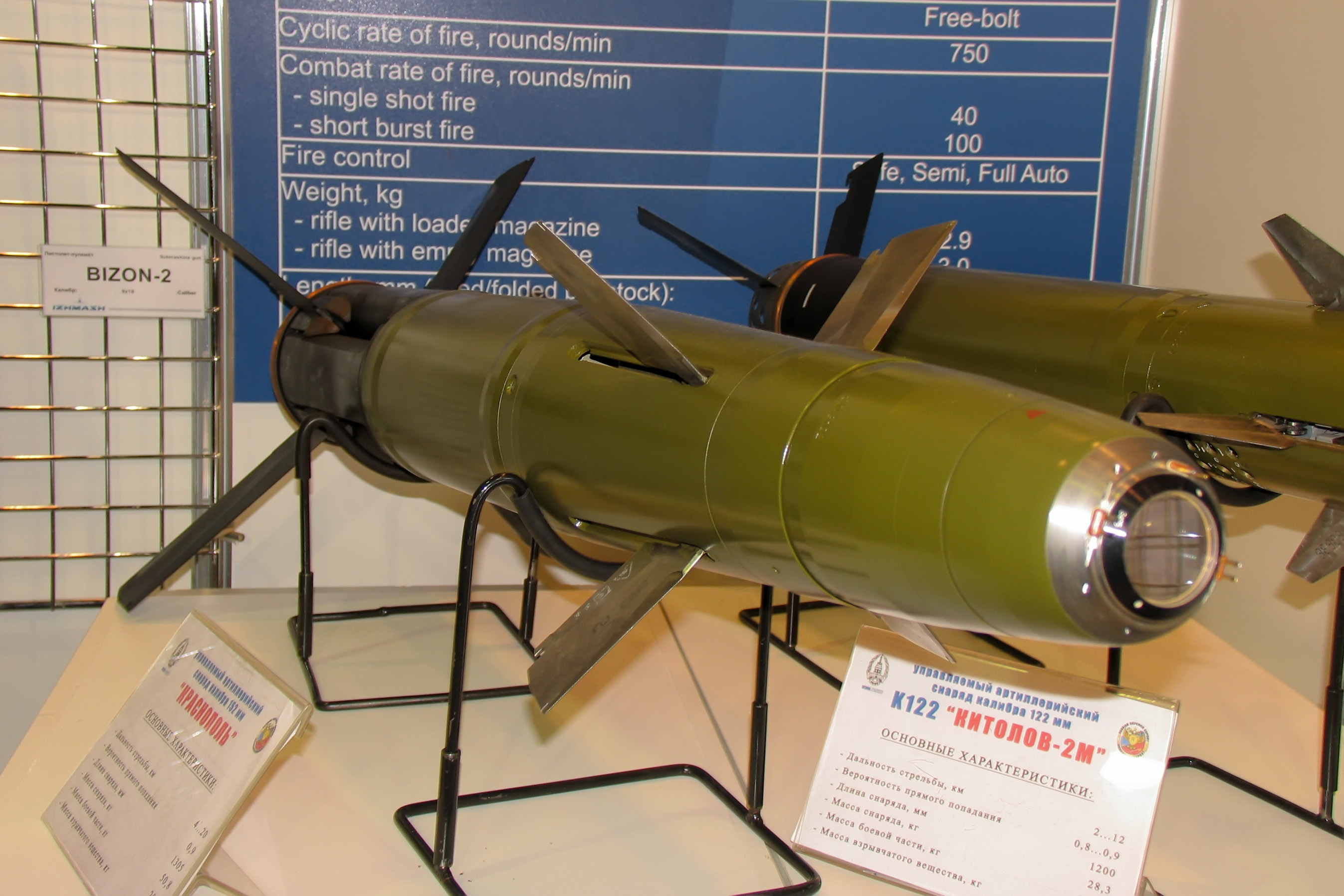
The 2K25 Krasnopol artillery weapon system.
The Russian military industrial complex increased last year the production of 2K25 Krasnopol precision-guided artillery shells which can destroy Western main battle tanks, RIA Novosti reported on February 7, citing a source with knowledge on the matter.
The Krasnopol can be fired by most 152 mm or 155 mm artillery guns. The round is guided by semi-active laser and has a range of 20 to 30 kilometers.
“The high accuracy of Krasnopol shells makes it possible to hit small-sized enemy targets, including moving ones like tanks,” the source said. “In particular, these shells can be successfully used to destroy NATO Abrams and Leopard tanks, which should be delivered to Ukraine.”
According to the unnamed source, the production rate of Krasnopol shells will continue to grow this year. However, it is unknown how many exactly Russia is planning to produce.
The Krasnopol hits its target from top, the weakest point in the armor of any main battle tank. The shell is armed with a high-explosive warhead that weights between 6.50 and 11 kilograms, depending on the version. A laser designator, which can be carried by infantry, mounted on ground vehicles or installed on aerial drones, is used to illuminate targets for Krasnopol shells.
The Russian military has been using Krasnopol shells against high-value targets since the start of its special military operation in Ukraine last year.
Ukraine is currently preparing to receive dozens of modern Western-made main battle tanks, including 14 Challenger 2 from the United Kingdom, 31 Abrams from the United States and a total of 32 Leopard 2 from Germany, Poland and Canada.
These tanks are meant to gear up Kiev forces for a possibly large-scale offensive against the Russian military upcoming Spring.


