


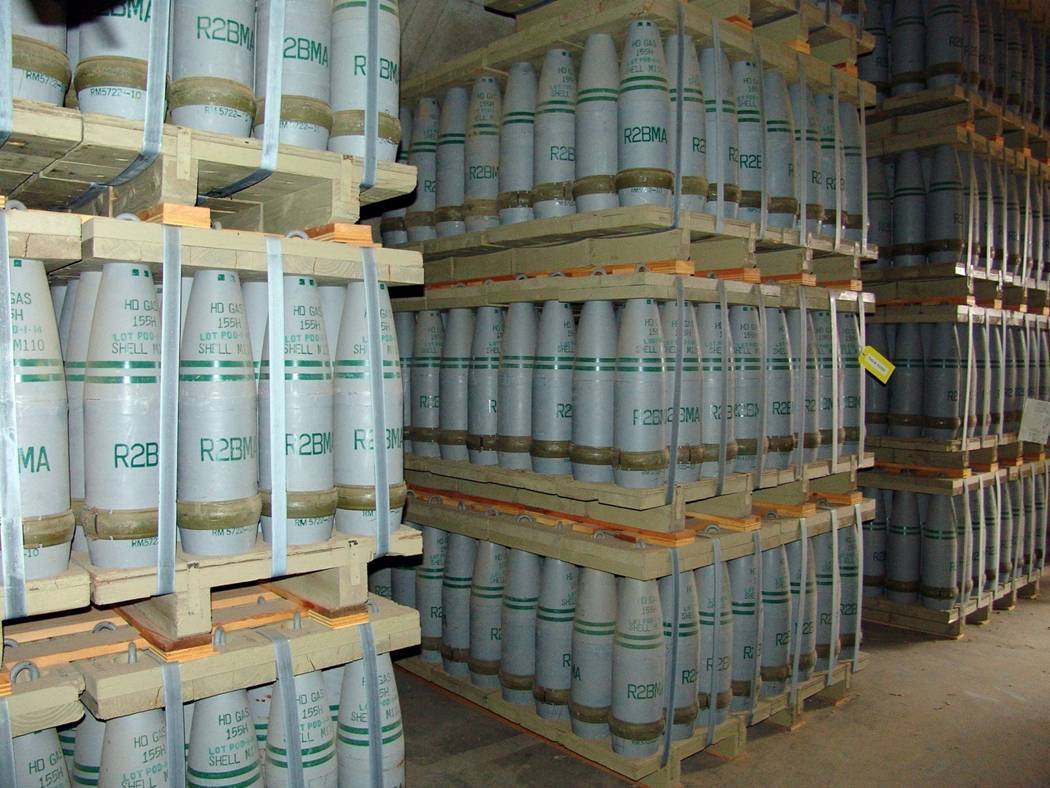
Illustrative Image
Estonia is considering including 155 mm cluster artillery among its military aid to Ukraine, the country’s Defense Minister Hanno Pevkur told the national TV and radio broadcaster ERR on January 26.
Estonia has a stockpile of DM632 155 mm cluster shells, which were made by Germany’s Rheinmetall. The shell opens up with the help of an explosive charge at a height of 300-500 meters, releasing 63 DM1385 submunitions, covering an area of some 100 square meters. The sumunitions are especially effective against personnel and lightly armored vehicles.
The country will not be able to supply these cluster shells to Ukraine without the approval of Germany, which has ceased the production and use of such munitions.
“We’ll have to see what agreements between our forces we reach with Ukraine,” Pevkur said. “And we’re trying to secure the various authorizations we need. And then maybe we can comment further on what we’ve provided and what we haven’t. Should we provide them [cluster munitions to Ukraine], I don’t see a problem with that on Ukrainian territory, because cluster munitions are already being used by both sides’ armies on Ukrainian territory.”
Estonia has been pushing for more military air to Kiev forces since the start of the Russian special military operation in the country nearly a year ago.
Over 100 countries have signed the convention that prohibits the use of this kind of artillery shells, but neither Estonia nor Ukraine were among them.
Cluster shells are considered dangerous particularly to civilian populations, as undetonated elements effectively become landmines. The DM632 is equipped with a mechanical self-destruct system. However, it does not always work.
The Estonian plan to supply Kiev forces with old cluster shells, which would expose civilians to danger, highlights NATO’s struggle to keep the Ukrainian war machine up and running. The organization’s members are crossing more and more red lines in order to prolong the conflict in the country.


Let’s be real. Washington decided long ago that Cuckstonia should transfer them. The Geneva convention means nothing to the terrorists in Washington. They were fine with using agent Orange in vietnam, destroying the environment and causing horrible birth defects for multiple generations. They were fine with nuking Japan. There isn’t anything conceivable America isn’t fine with.
And uranium depleted shells in fallujah Iraq same birth defects followed
Russia needs to understand there are no red lines and they shouldn’t have any either dealing with these wef nato criminals
For that matter you can add Serbia to the list where they also used uranium depleted shells.
Lots of aerosolized DU flying around Yugoslavia. I still want to know what type of weapon the US were using in 2003 that burned the little boys arms off and didn’t leave a scratch on his torso. DIME weapon of some sort?
https://rumble.com/vwxxi8-ukraine-on-fire.html
America needs a war on its lands so that the population there can feel firsthand what war is.
Estan locos los enanos estonios, con ellos, a sabotaje los hacen añicos
If the EU did not have the US behind them they would not give shit to these people in Ukraine. History should have point out to them that the US has baled out in some way on every war it has been in. If it get to hot they will walk on the EU.
Incorrect. Even without USA only Germans would support Russia. When I said Germans, I mean German Stasi Government – ordinary people in Germany supports free Ukraine. Luckily for the EU we have wider alliance with other Free World Countries and greed of German leaders is now irrelevant
You are upside down again.
USSR collpased and left, what they for very good reasons could not keep. Second time no learner within 100 years.
And the rest is true or partly true. It is very good to have big friends or almost friends to help You to reopen the world for us as well as them.
Ukraine has the right to decide themseklf and devellop as they wich in the gicven context. Thats denied by the Rusticans. Some Ukras are not nice as well.
Typical Rustica´n context ignoring UN has made decisings about it too. Very much as Russia shoukd be no memeber there anymore too.
Rsústica is no part of Europe. No solutions are from there too.
“Ukraine has the right to decide themseklf ”
nope, they have the right to utter destruction and deletion from history(Again)
Ukraine gave up any rights it had in 2014 when it began a program to murder ukrainians inside ukraine.
German Made ensures it kills juden and their juden allies.
Anti-juden ensures full backing from Jesus and his Creator, Allah(swt).
Anyone who questions and doubts this can go their filthy jewish way and find out soon.
You’re wrong.
My sins will be forgiven, and placed upon the filthy jews.
Death is forgiveness. The Muslims will die together with the Jews.
He is correct. We are so united in those matters and mainly doing much better then most.
Give link for something better pls…
Muslims follow the dirty Jewish way.
The Islamists depend on the Jews for the prophecies to be fulfilled.
The Jews say they will not bring peace and the Muslims say they will suffer.
Paradise is a word for a final death, about which many myths have also been created.
A jewish body can be killed just as much as any other, and I am pretty confident that the grenades don’t differentiate and only hit one sort of target.
The Jewish book, the Torah, is the origin of the Middle East’s 12 religions.
Islam is one of them and the Muslims have helped to maintain the myth of Jesus.
The american journal has an excellent short video describing who is planned to run Ukraine in the future. Basically it will be a digital prison colony run by companies like West Exec and other unelected people. Enjoy your futuristic gulag controlled by non Ukrainians and run for the purpose of extracting the wealth to overseas corporations. A shadow government running in DC set up purposely to start these wars and enslave humanity.
The average Ukretard or citizen of the US empire has no clue about what went on in Yugoslavia with the multi-national security corporations. It was the model for all future US imperialist endeavours.
Thats highly incorrect.
Any of them can read about it for free at the internet in many versions as well as in details too about many things.
Things there started as a socialistic collapse and a war between Tudjman and Milisovitch dividing the country into even worse.
THEN some alliance went in too too late.
Simplistically, but the interference of external powers like German intelligence in support of separatist movements to break Yugoslavia are less known. Germany today has vast investments and control over Croatia. German provision of ex east German weapons to Albania just prior to the ponzi scheme collapse, allowing vast ransacked weapons caches to find their way to the kla in ’98 in preparation for their insurgency against Yugoslav forces. As expected NATO had to rescue them as the JNA were dealing effectively withe the kla insurgency. People do not tie the dots,with MSM putting it down to civil war.
Russia should do the right thing and destroy the depot of these prohibited weapons while they still are in Estonia. DESTROY the storage facility. The chihuahuas will not retaliate against the strongest atomic might on the planet Earth.
If Ukranian hitmen can cross the Estonia border to kill Russians, Russians should cross the border to sabotage stockpile warehouses.
The Ukras swim from Odessa with their bicycles and enter by Vladivostok.
Hang every Estonian politician involved in this
It is run by puppets. Apparently much like many EU countries.
Now Germany has some serious Stockholm syndrome. Gets hit by by destruction of Nordstream critical infrastructure, and instead of suing NATO and Ukrainian regime (or its master who use it as proxy) they bend over as many times as commanded so that they can take it up the arse some more.
Sure we all are puppies here and elect each other being nice puppies to each other and vassals too.
We are runned by Mossad, Jeews, nazis, Rotchild, FBI, CIA and even pinqueens beng excahnge students from Antarctis.
And You really dont Germany. They are re-raised. Wasnt that needed instead of Nazisme. I Think so.
Arrrrh: I forgot “masters” and “elite”.
Debt too. The dollar collpased 3 times last week.
Thats Your world. Nota single world about Your own world. Thats forbidden even with Meduza. Facewbook is out because Putin has no pretty face even when the light is off.
Sure we all are puppies here and elect each other being nice puppies to each other and vassals too.
We are runned by Mossad, Jeews, nazis, Rotchild, FBI, CIA and even pinqueens beng excahnge students from Antarctis.
And You really dont Germany. They are re-raised. Wasnt that needed instead of Nazisme. I Think so.
Arrrrh: I forgot “masters” and “elite”.
Debt too. The dollar collpased 3 times last week.
Thats Your world. Nota single world about Your own world. Thats forbidden even with Meduza. Facewbook is out because Putin has no pretty face even when the light is off…
You should woner why they dont like You too.
Dividing them with Hitler was no improvement. Many even prefared Hitler.
give it time and it will be done.
AND it is not even sure! Wow, what a joke.
Just knock out their power.
The Baltics lapdogs can empty out their weapons inventories. They emptied their brains already. They cannot empty their balls though, because they are non existent.
Tyupical level from Your kind starting with lapdogs, empty brain and balls.
Very much as You could use more flushing toilets
Estonia escalating recklessly.
Not at all. We all donate what we have.
Estonaia is all of us.
Dont worry, no one here forgets who is owed what.
The way the Baltics have been for years systematically persecuting their Russian minorities, isolating Russian transportation via rail restrictions and travel visas, and then their irritating barking, they would be smart to keep their military capabilities for themselves.
Thats correct. Nomne of them want exactly what we see in Ukriane.
Those Russians didnt live there until Rustica took over. A good idea is to go home to Your ancisters or integrate. They living there as an excuse for Rusian to save those Baltics.
And som rrandom Medved dont decide what those people do in their own country to protedt themself.
Good it will make excuse for Russia start to use Russia’s huge cluster bomb stock they have many time amouth than US and NATO have.
Should “Estonia” supply these angloZionaZi terror weapons to their naZi forces in rump Ukrapland then “Estonia” should pay the price and be paid in kind with Russian coin. The time for respecting rump Ukrapland’s borders and limiting of this war with its Natostan owners is over.
Al CIAduh’s idiot Bareback, the trampoline artiste in Berlin, has declared war on Mother Russia.
Its the opposite way around even before You divided Europe with Hitler.
A direct nuke hit of the motherf@cking estonian capital would calm them down immediately
Sure – Leningrad might be gone as well and all the way to Novgorod.
You have not even learned about Tjernobyl and Fukahima.
Well, he learnt to spell, something it looks like you will never master.
Thats nice. Non should blame them that.
Estonia….BWAhahahahahahahahahahahahahahhahahahahahahhahahahahhahhahahahahahahhahahahahhahahahahhahahahhahahahahhahahahahhahahahahhahahahahaaaaaaa.
thats a great Joke that is…Estonia PFFT. another country that needs denazification programs.